Cysts in the arm (Ganglion)
Find out what hand cysts are, how they form and how to deal with them.
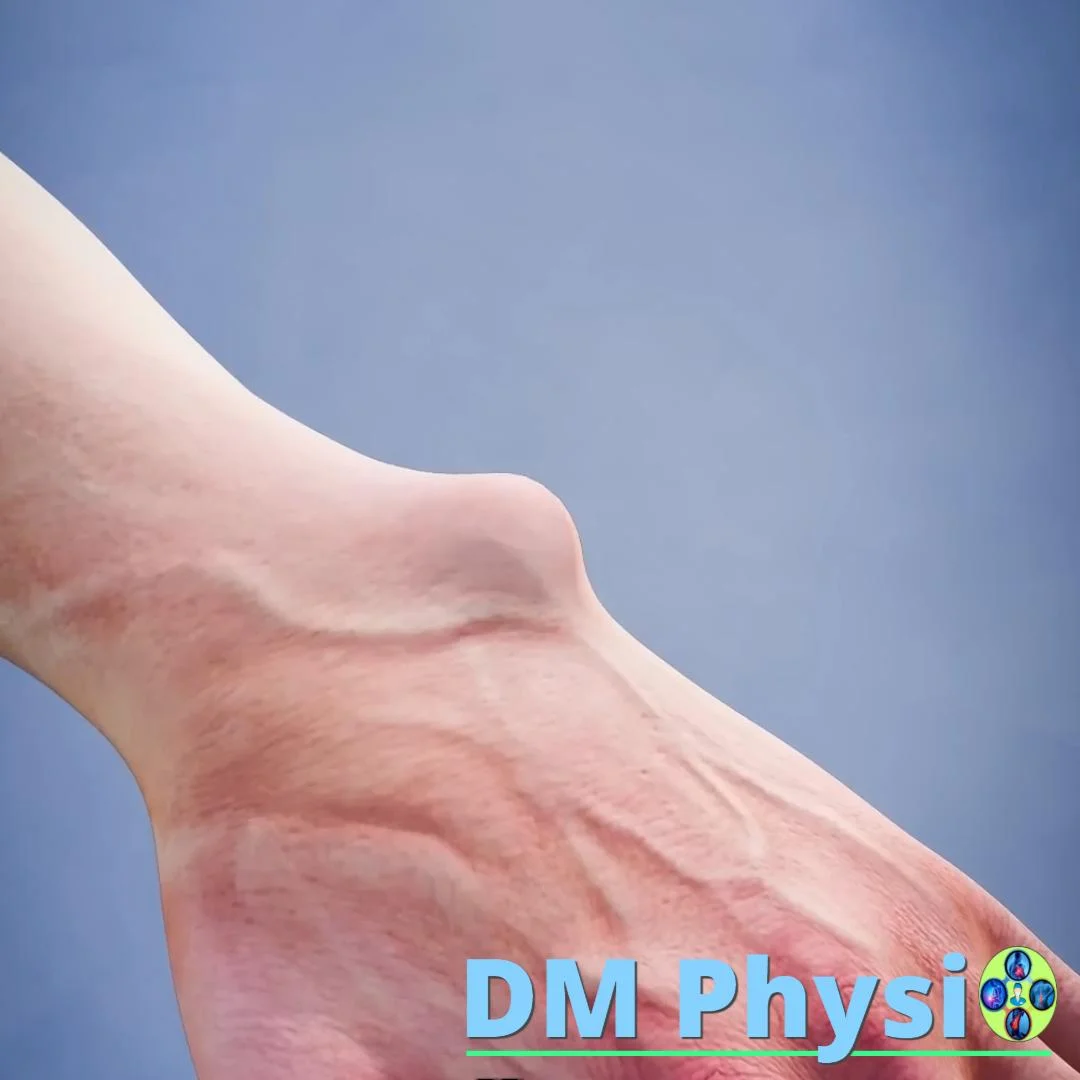
What are hand cysts?
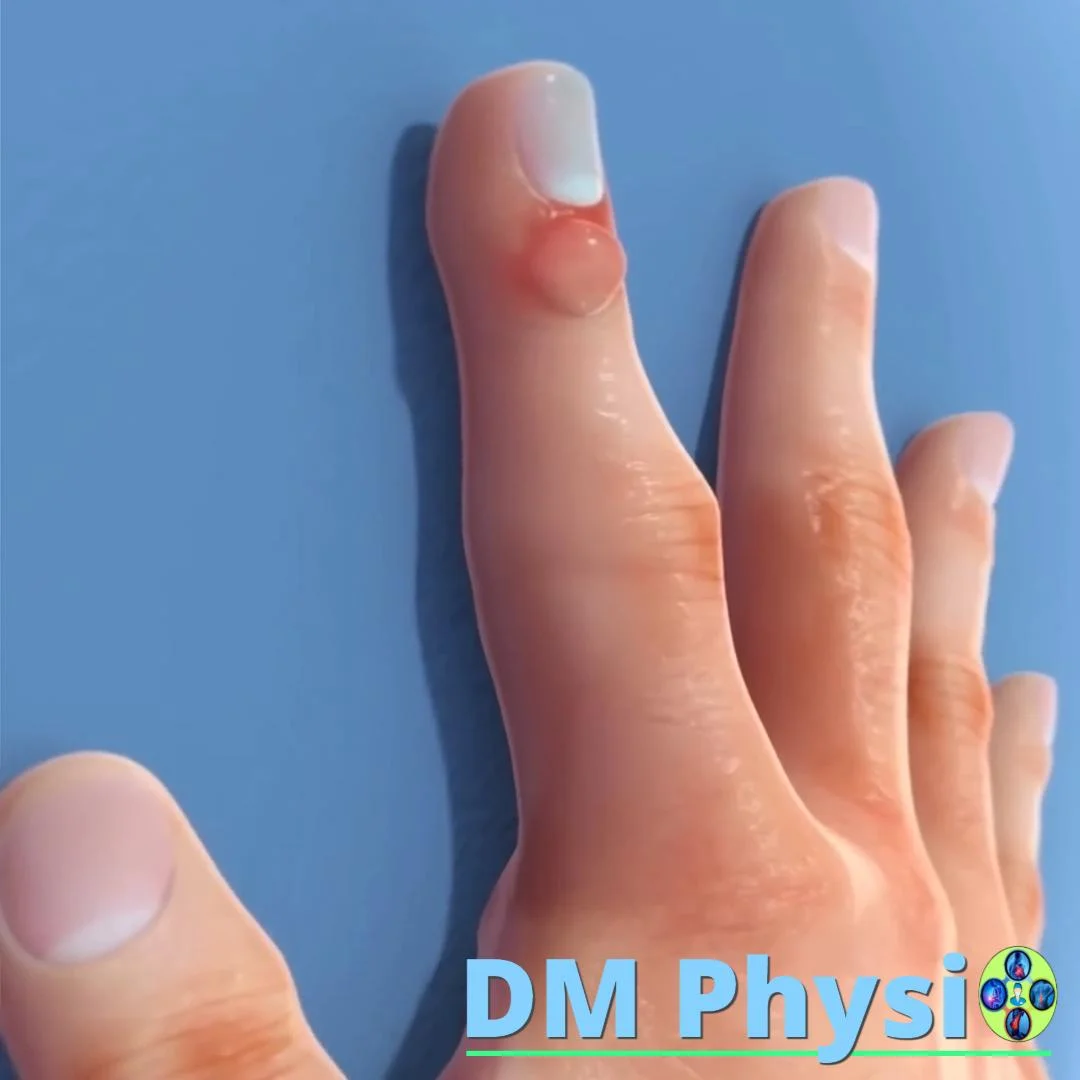
Hand cysts, most commonly known as ganglion cysts or ganglions, are benign, fluid-filled growths that occur along the course of tendons or near joints. They are the most common tumor-like formations of the soft tissues of the hand and wrist.
Ganglions are not malignant and often go away on their own without treatment.
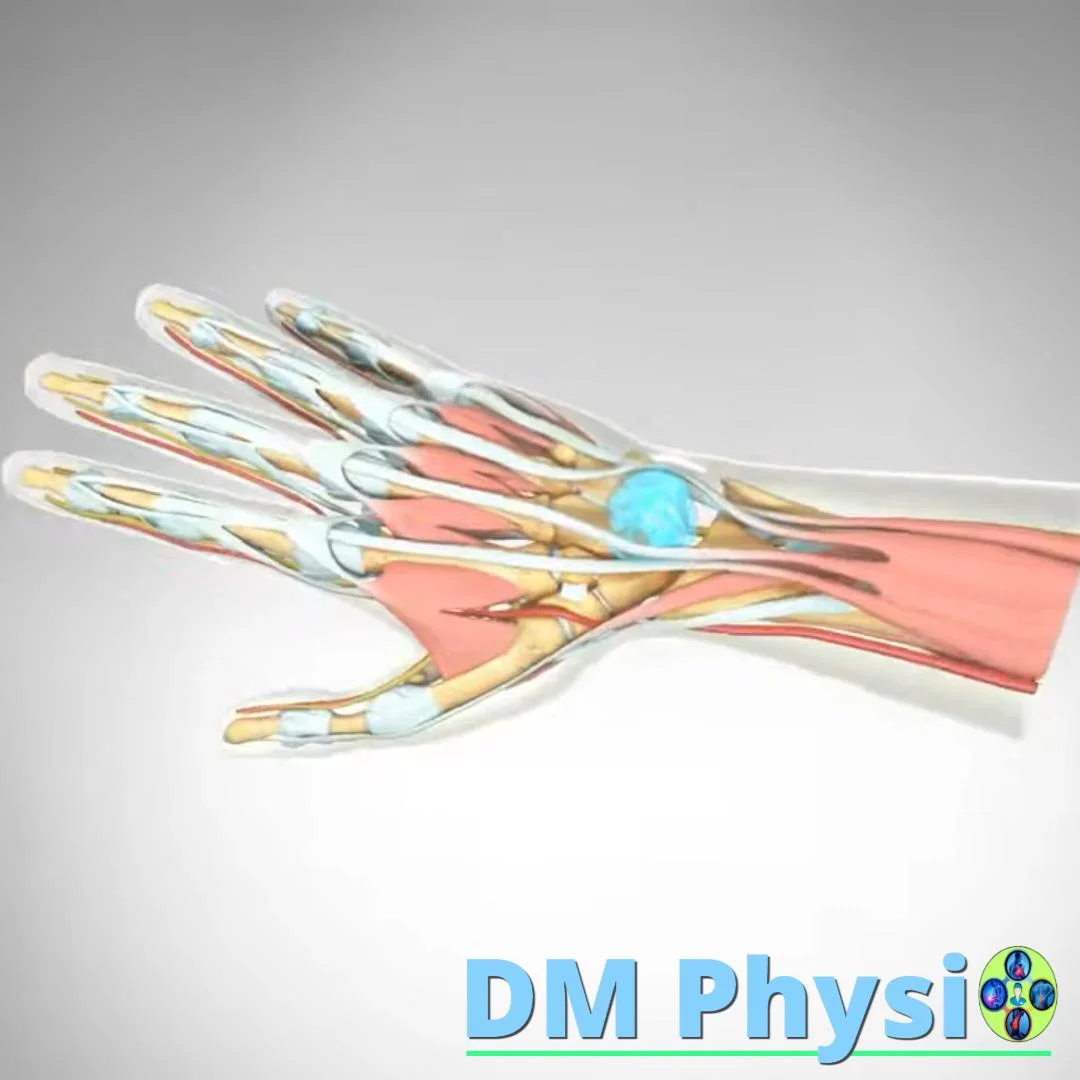
Causes and symptoms of ganglion
The exact cause of ganglion cysts is still not fully understood, but it is believed to be related to repetitive microtrauma and tissue wear and tear.
Causes of occurrence
The ganglion is thought to form when the joint capsule or tendon sheath tears, allowing synovial fluid to leak out and form a pouch. Risk factors include injuries, osteoarthritis, and repetitive motion.
Visible symptoms
The main symptom is the appearance of a palpable lump or swelling. The size of the cyst can vary and it can grow or shrink. They are usually round or oval and can be soft or hard to the touch.
Additional symptoms
In most cases, the ganglion is not painful. However, if it presses on a nearby nerve, it can cause pain, numbness, tingling, or weakness in the affected area. Movement of the joint may worsen symptoms.
1) Dorsal ganglion of the wrist
This is the most common type of ganglion that occurs on the back (dorsal part) of the wrist. They are often attached to tendons or joint capsules and may enlarge with movement of the wrist.
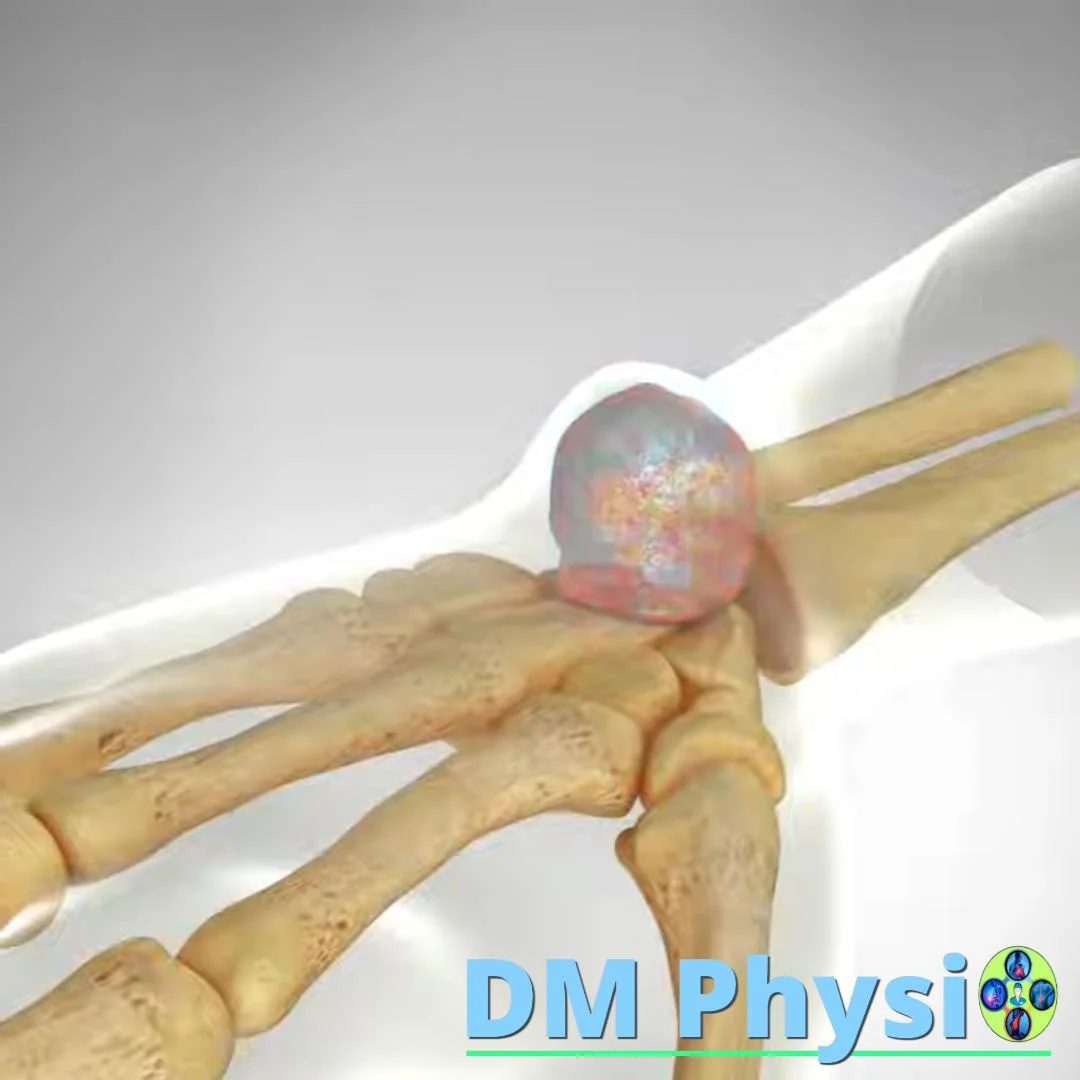
2) Volar ganglion of the wrist
This can create on the front, on the palm side of the wrist. This type is less common but can be more difficult to diagnose and treat because it is located near major blood vessels and nerves.
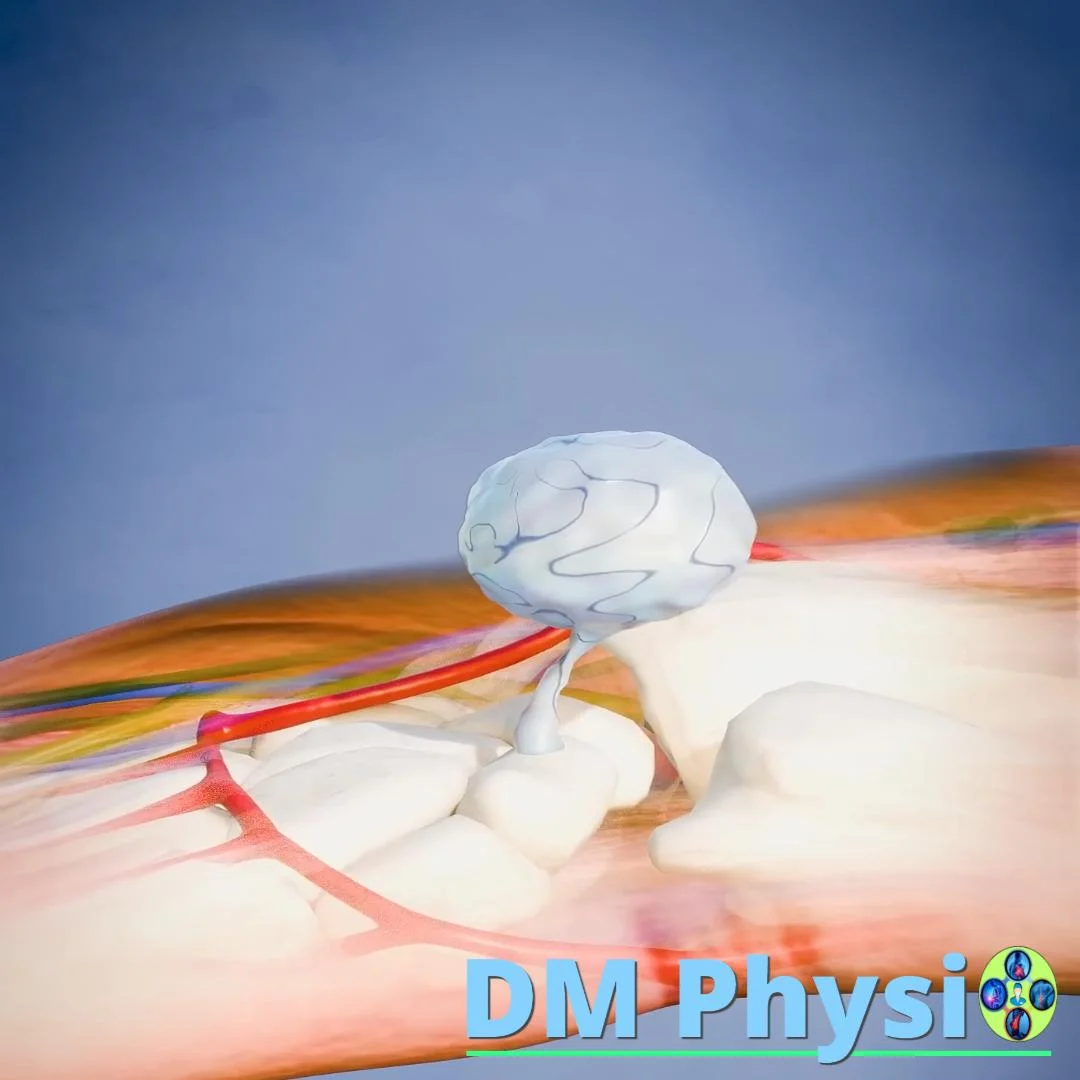
3) Finger ganglion
Cysts can also form at the base of the fingers or in their joints. They are usually smaller, but can cause pain when grasped or limit the movement of the finger.
What is the role of physiotherapy?
While surgical removal is one option, a conservative approach including physical therapy can help reduce symptoms and improve hand function.
1. Pain management
If the ganglion causes pain, we apply techniques to relax tense muscles and improve blood circulation in the affected area. This can bring relief and reduce discomfort.
2. Strengthening and restoration
We create customized exercise programs to improve strength, range of motion and stability of the wrist and fingers. This helps restore normal joint function.
3. Prevention
By teaching proper ergonomics and hand biomechanics, we aim to prevent future overload and repetitive strain that can contribute to cyst formation.