Muscular pain in the pelvis and buttocks
Find out the main causes of buttock and pelvic pain and what can help.
Why do the pelvis and buttocks hurt?
Pelvic and buttock pain is often caused by prolonged sitting, poor posture, or lack of movement, which leads to weakening or hypertonicity (excessive tension) of key muscles in the area. These muscles are responsible for stabilizing the pelvis and spine, and when they don't function properly, they cause pain and discomfort.
When there are weak or inactive muscles in the glutes, the body compensates by stressing other muscles in the lower back and hips. This is the beginning of a muscle imbalance that leads to a change in posture and ultimately to chronic pain.
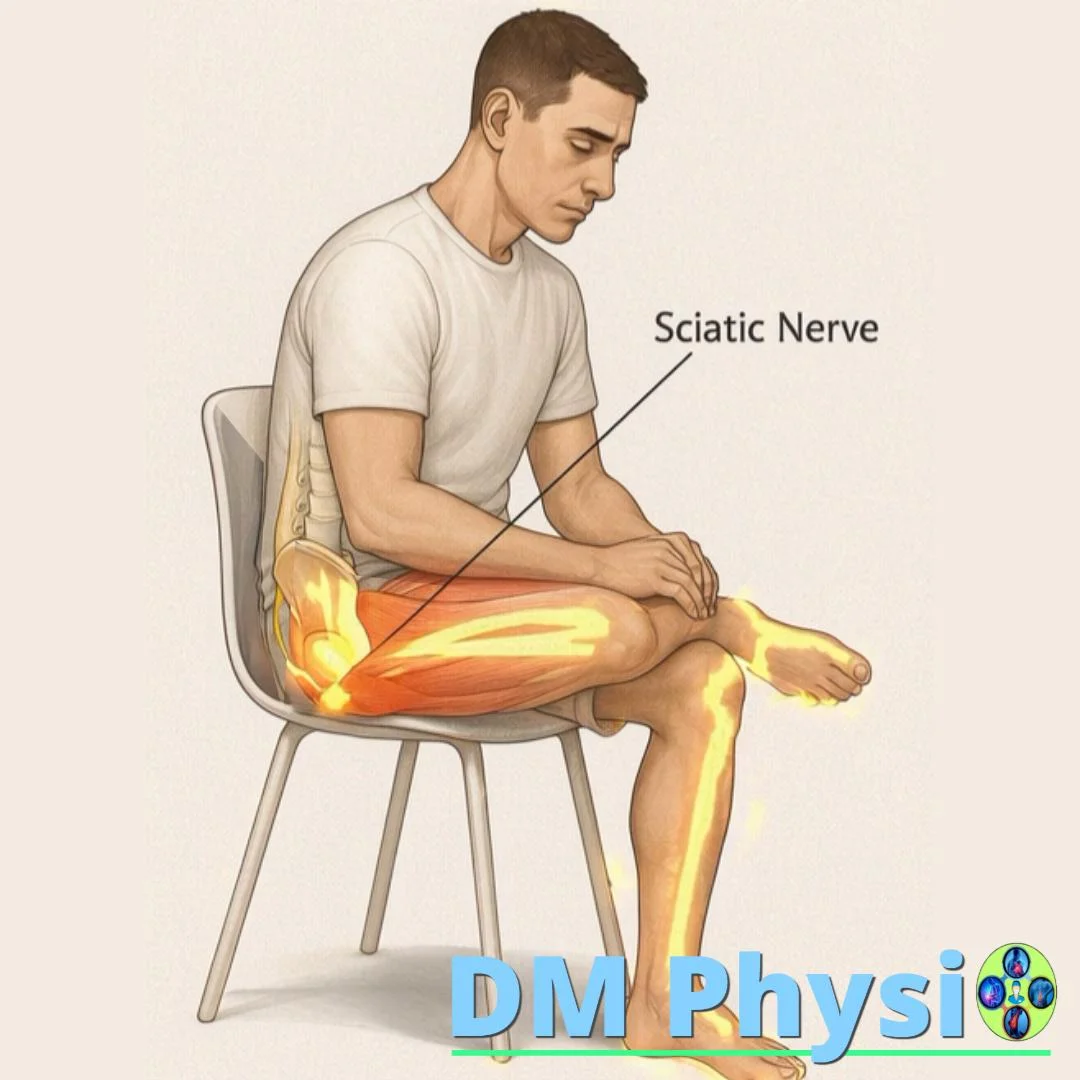
How is muscle imbalance formed?
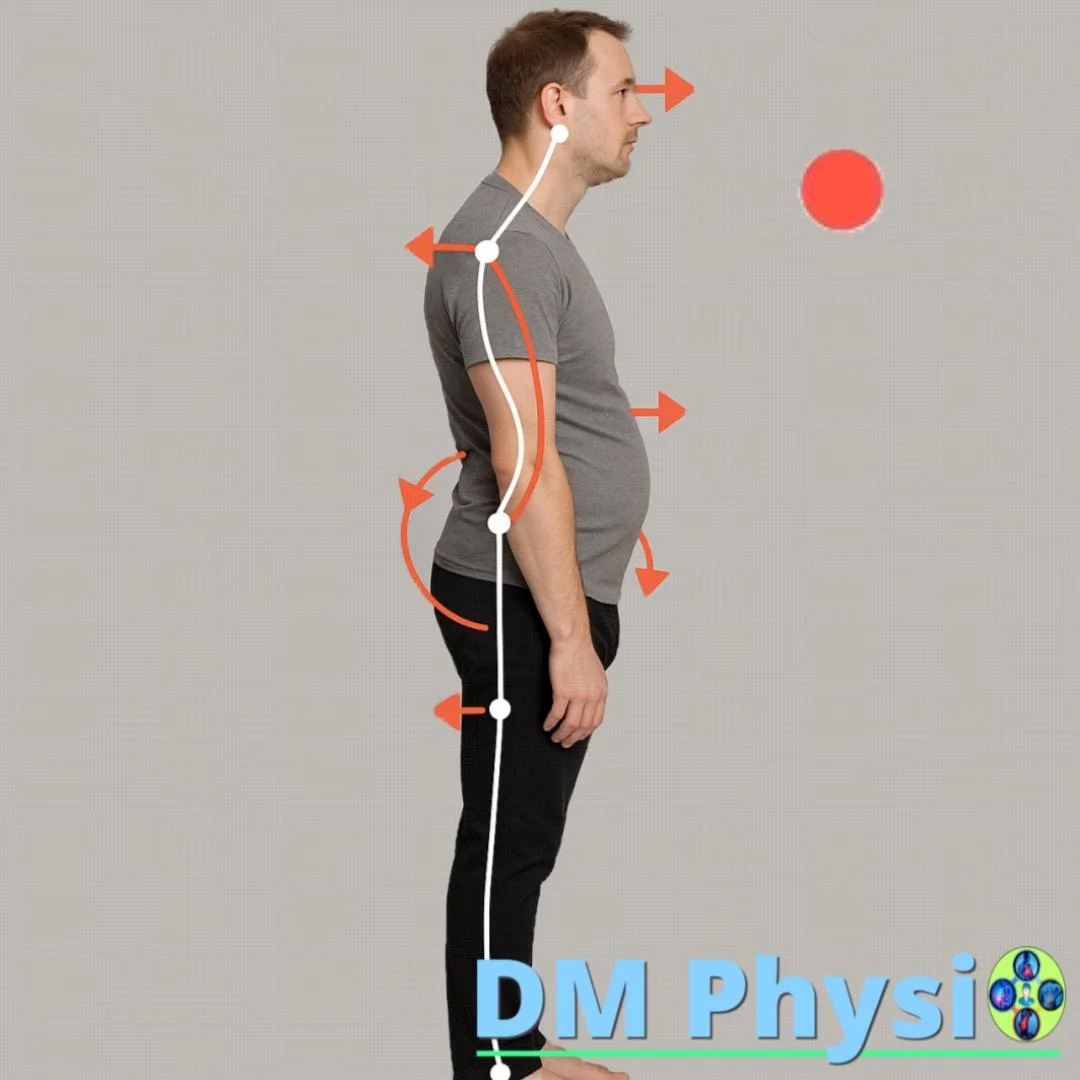
Improper posture
Prolonged sitting, poor posture or lack of movement lead to weakening of the gluteal muscles, which lose their strength and ability to support the pelvis and spine.
Compensation
To compensate for the weakness of the gluteal muscles, the body transfers the load to other muscles, such as those in the lower back or hips. They are overworked, become hypertensive and develop microtraumas.
Muscle spasm and pain
Overworked muscles react with spasm and the formation of trigger points. These points cause sharp or dull pain, limit movement, and can radiate pain to other parts of the body.
Which muscles are most commonly affected?
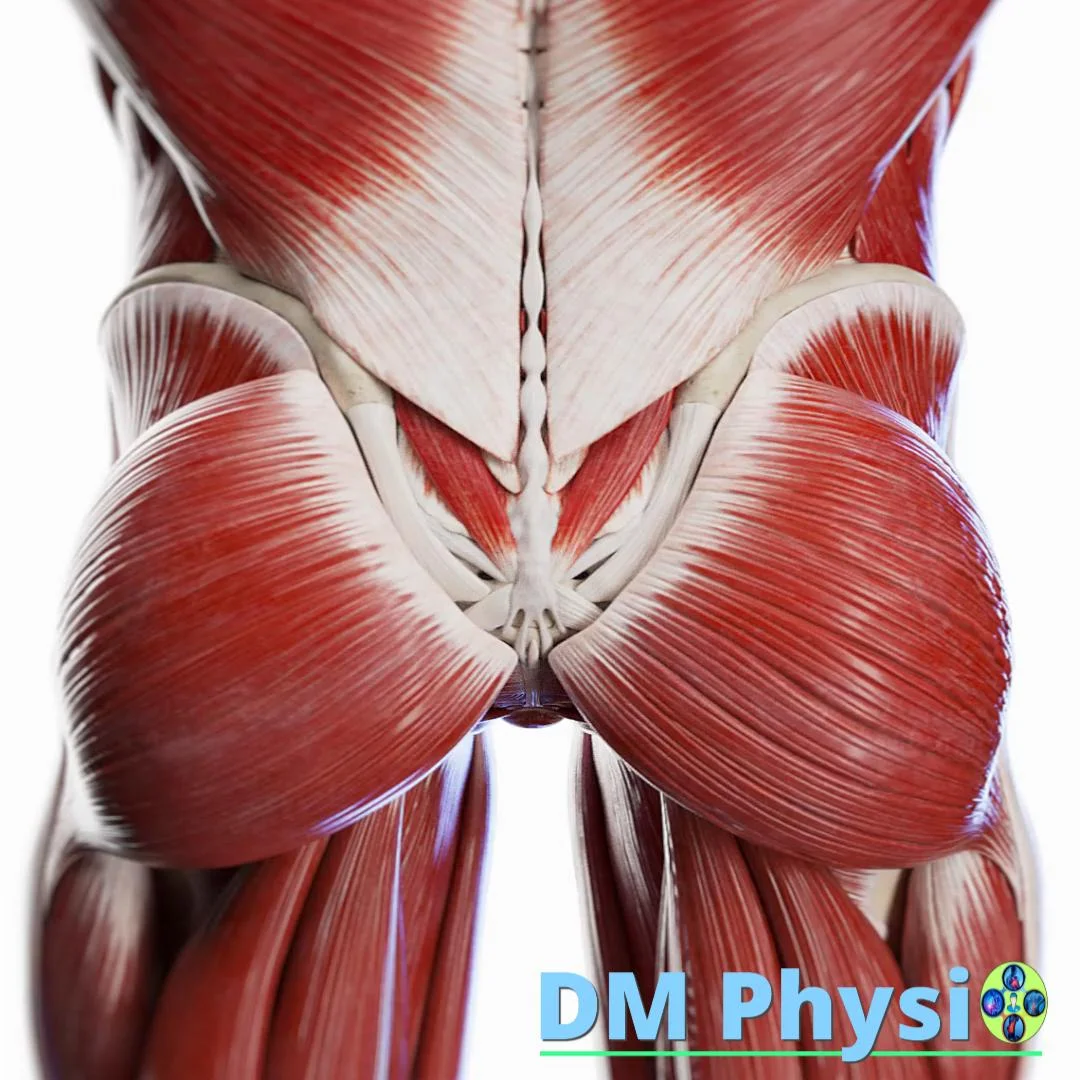
m. gluteus maximus
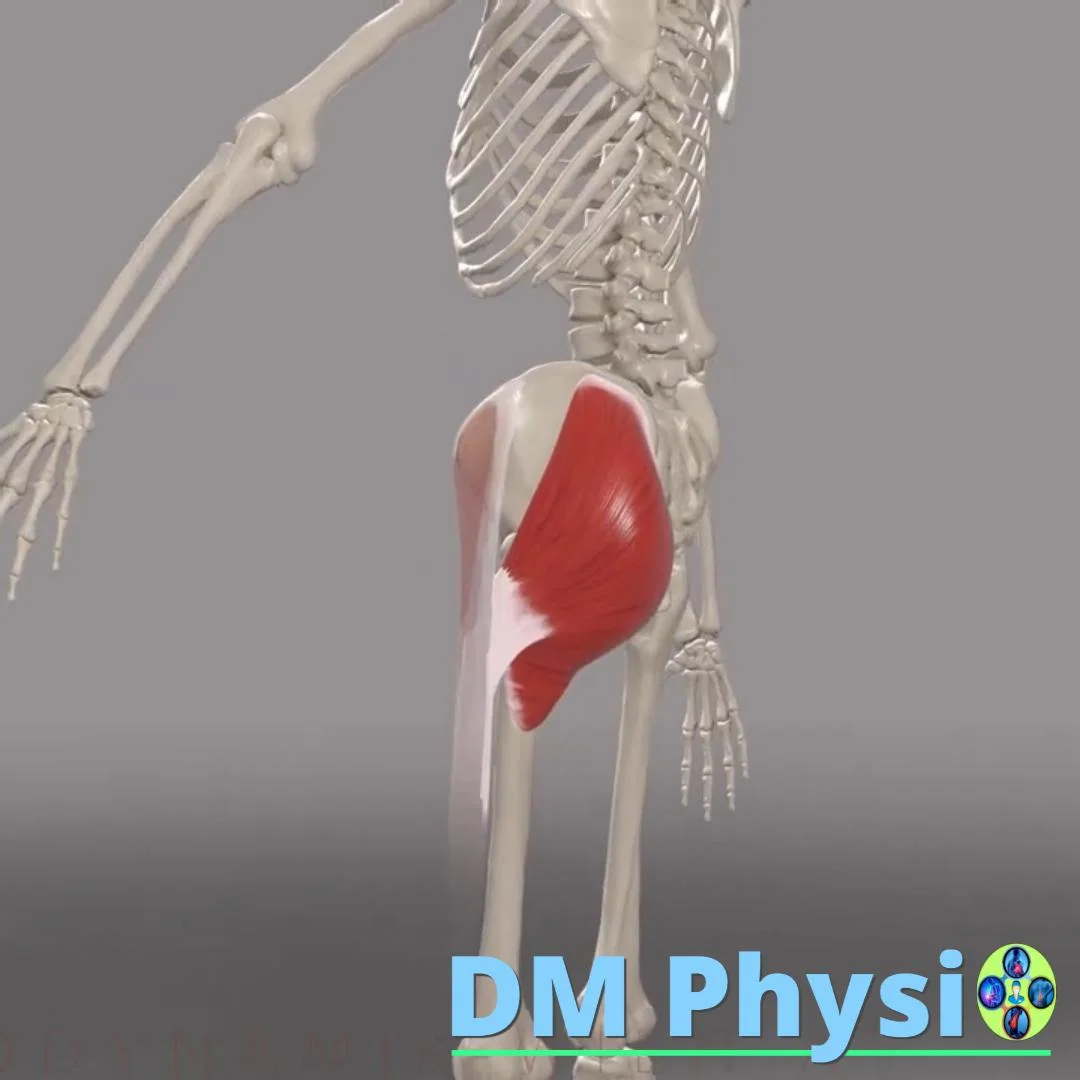
Anatomy and grip
The largest muscle in the body, forms the buttock. It starts at the pelvis and attaches to the femur and the broad fascia.
The location of the pain is shown in red
- Pain in the upper part of the buttock, which may spread to the back of the thigh or lower back.
- Occurs when getting up from a chair, climbing stairs or squatting.
- In sports - during sprints or deep squats.
m. gluteus medius/minimus
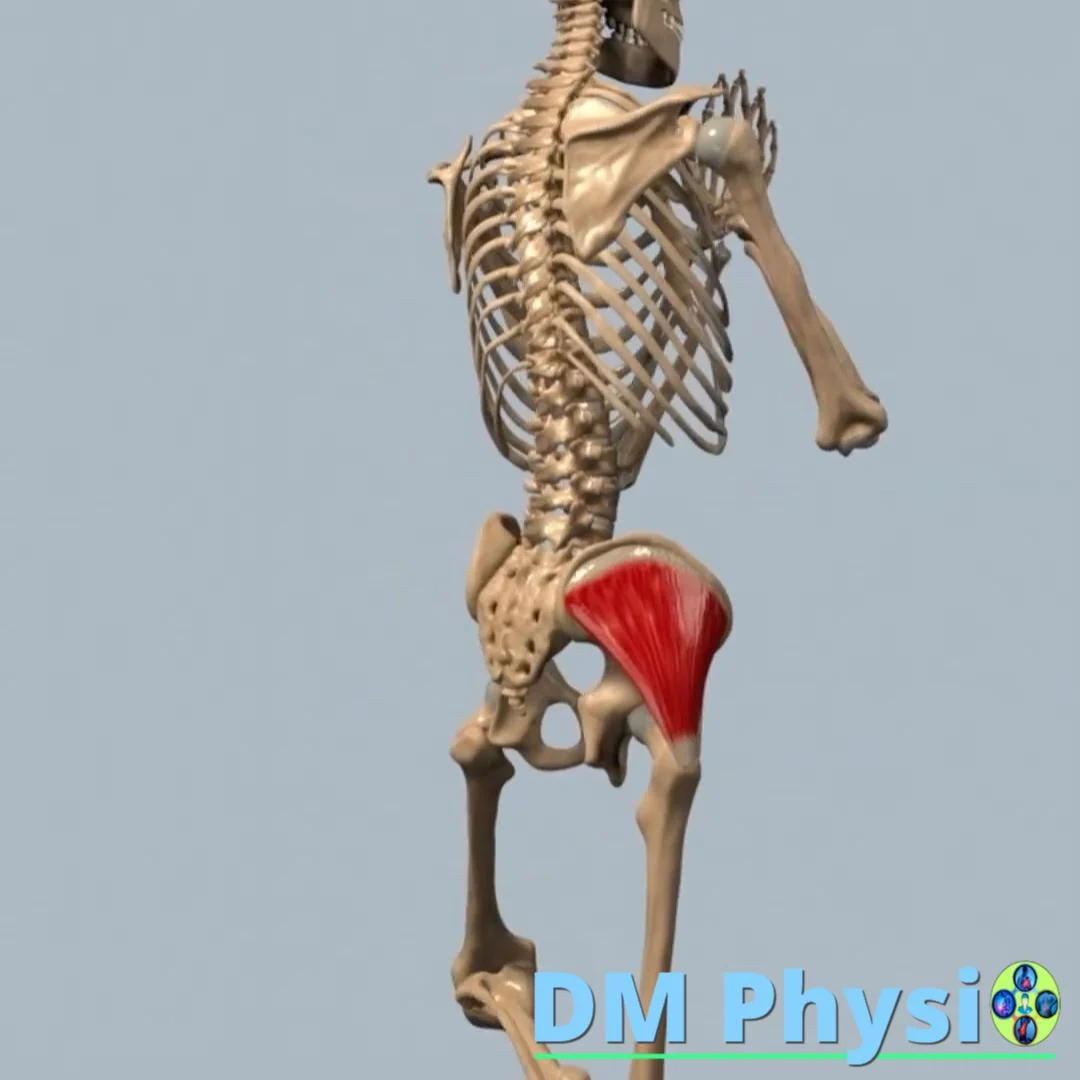
Anatomy and grip
They are located deep under the gluteus maximus. They connect the pelvis to the femur and have a key role in stability during movement.
The location of the pain is shown in red
- Pain in the side of the buttock, often radiating along the outer part of the thigh.
- It is provoked by walking, climbing stairs or standing for a long time on one leg.
- It can also be felt as a strain in sports with lateral movements.
m. piriformis
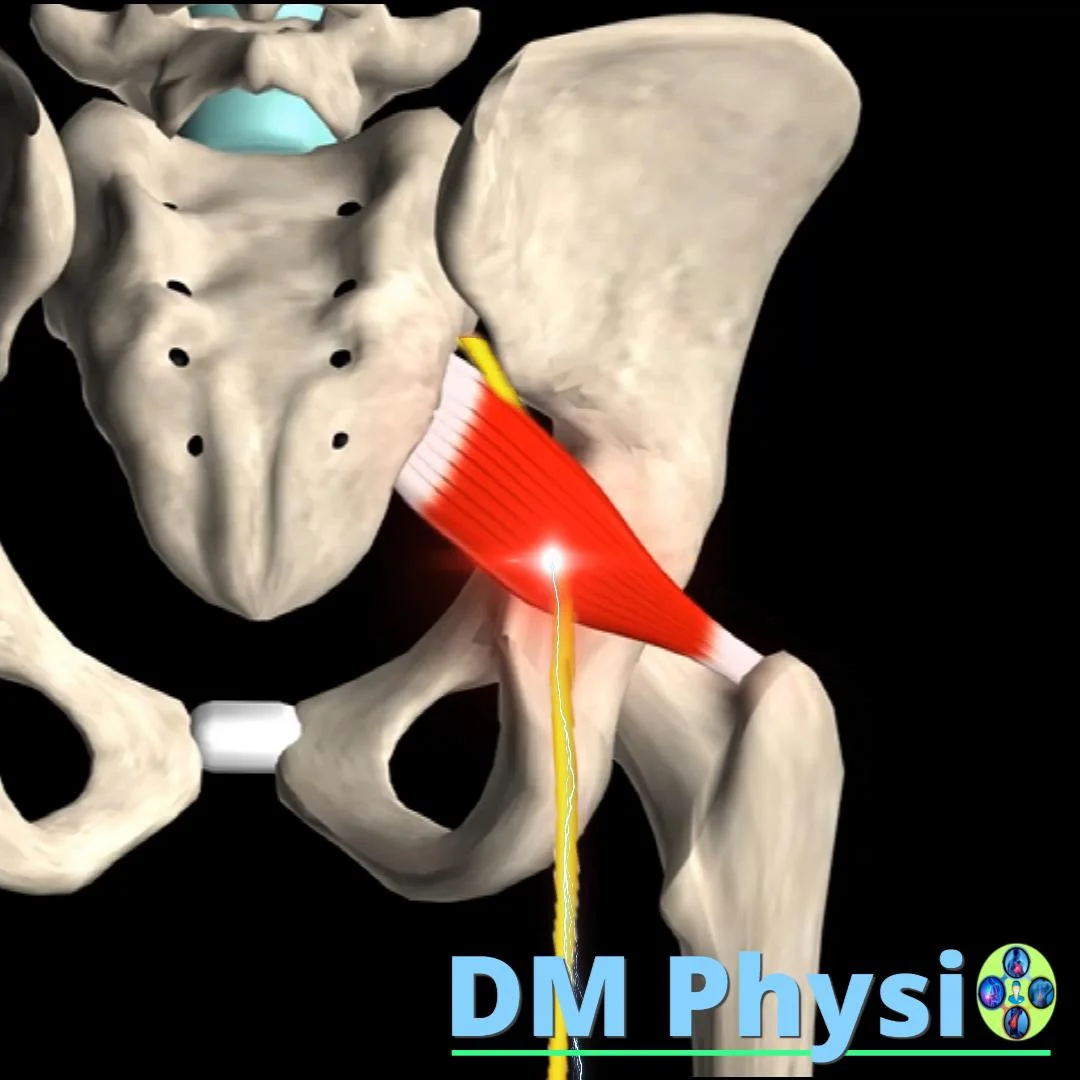
Anatomy and grip
A small deep muscle in the buttock that connects the sacrum to the femur. The sciatic nerve runs nearby.
The location of the pain is shown in red
- Deep pain in buttock, often radiating down the back of the thigh.
- It is aggravated by sitting for a long time, getting up from a chair or turning the leg outward.
- It is often confused with a herniated disc because the pain can mimic sciatica.
m. tensor fasciae latae (Tensor of the broad fascia)
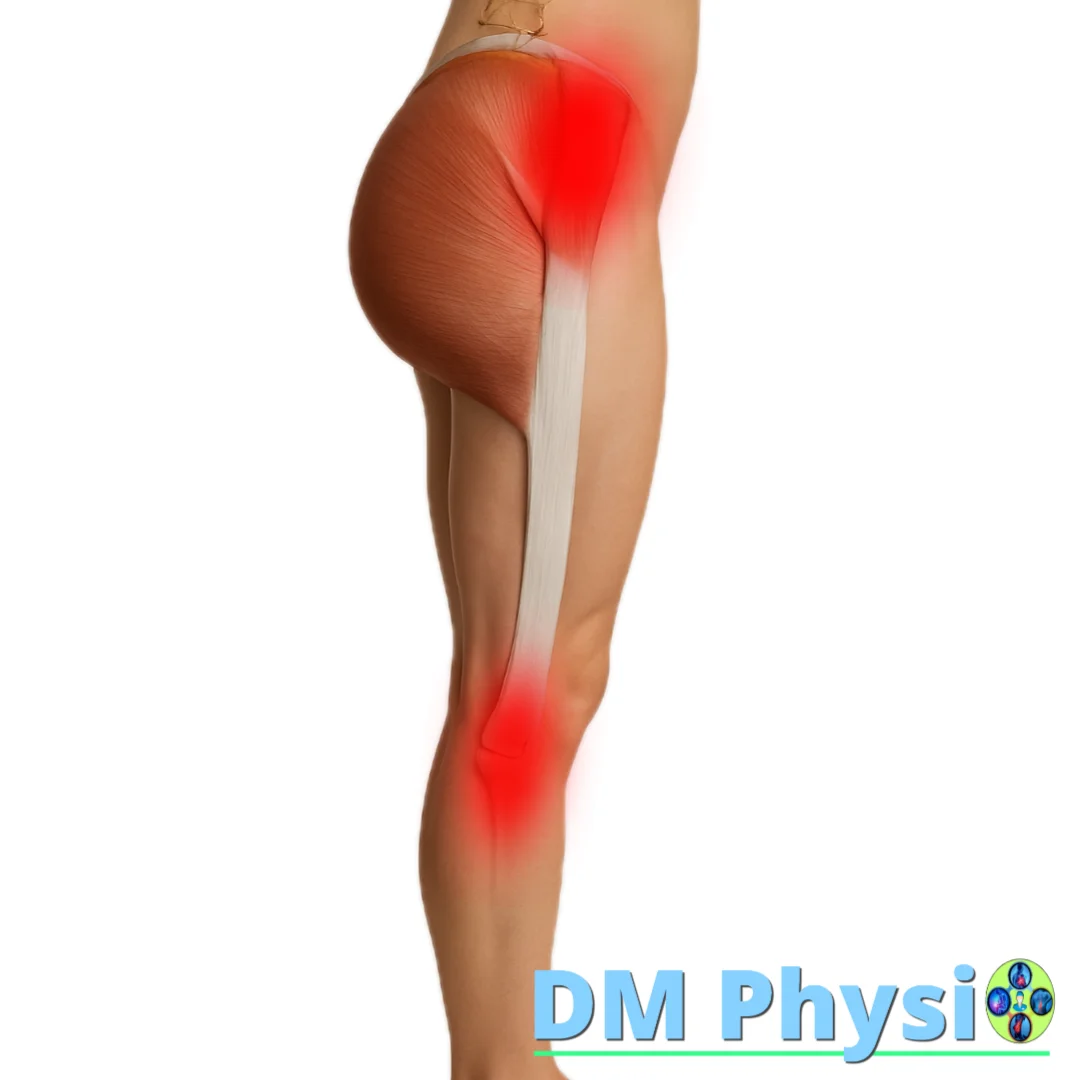
Anatomy and grip
A small muscle in the front of the thigh that starts at the pelvis and connects to the broad fascia (iliotibial band) reaching the knee.
The location of the pain is shown in red
- Pain in outer thigh and knee.
- Appears when walking, climbing stairs or standing on one leg for a long time.
- It is often aggravated in sports with running or sudden lateral movements.
m. adductor longus/magnus/brevis
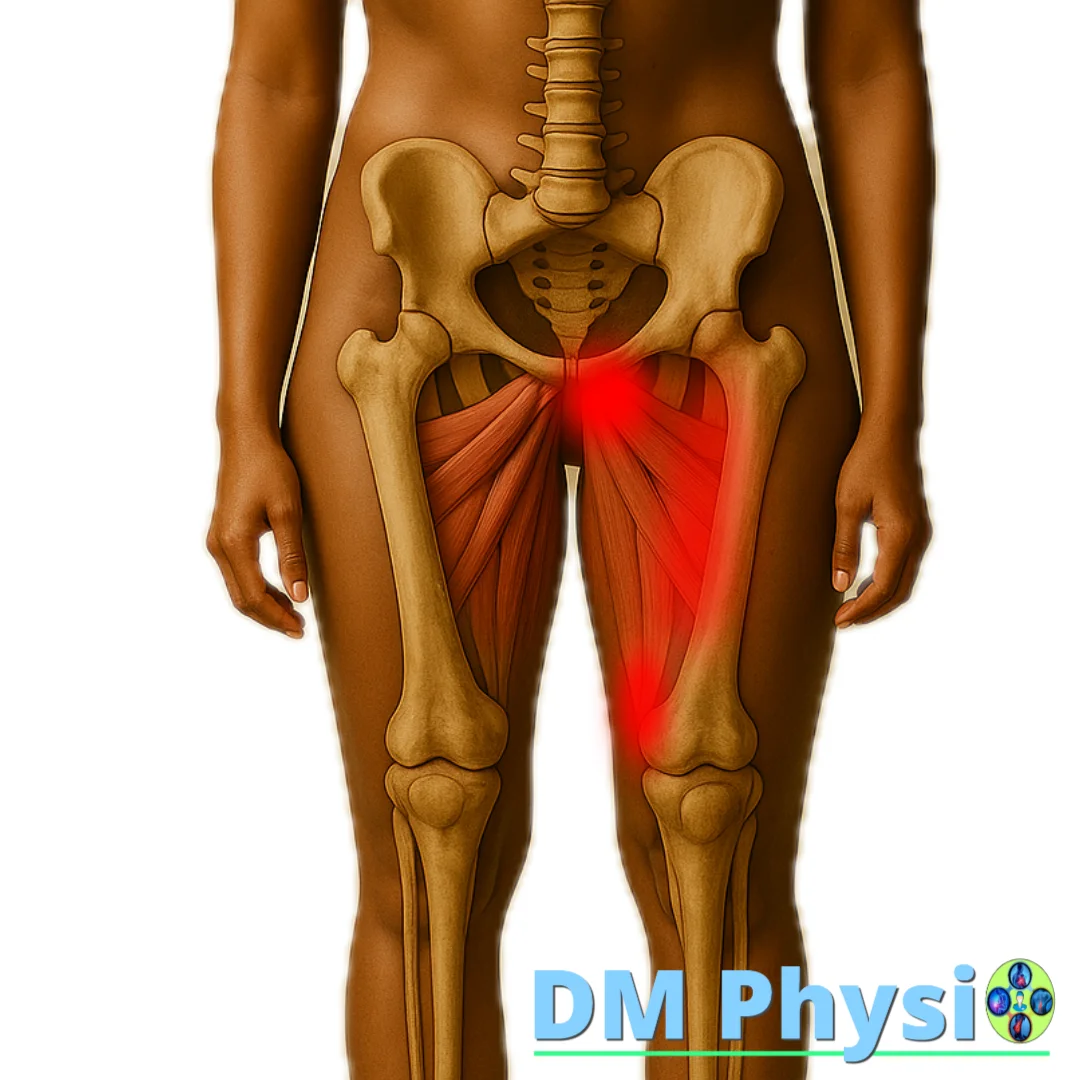
Anatomy and grip
They are located on inner thigh. They start from the pelvis and attach to the femur.
The location of the pain is shown in red
- Pain in the inner part of the knee, thigh and groin, often when rising from a chair or squatting.
- It is felt when going up and down stairs or when walking for a long time.
- It can be aggravated by sports with sudden lateral movements (football, dance).
m. biceps femoris/semitendinosus/semimembranosus (Posterior thigh muscles)
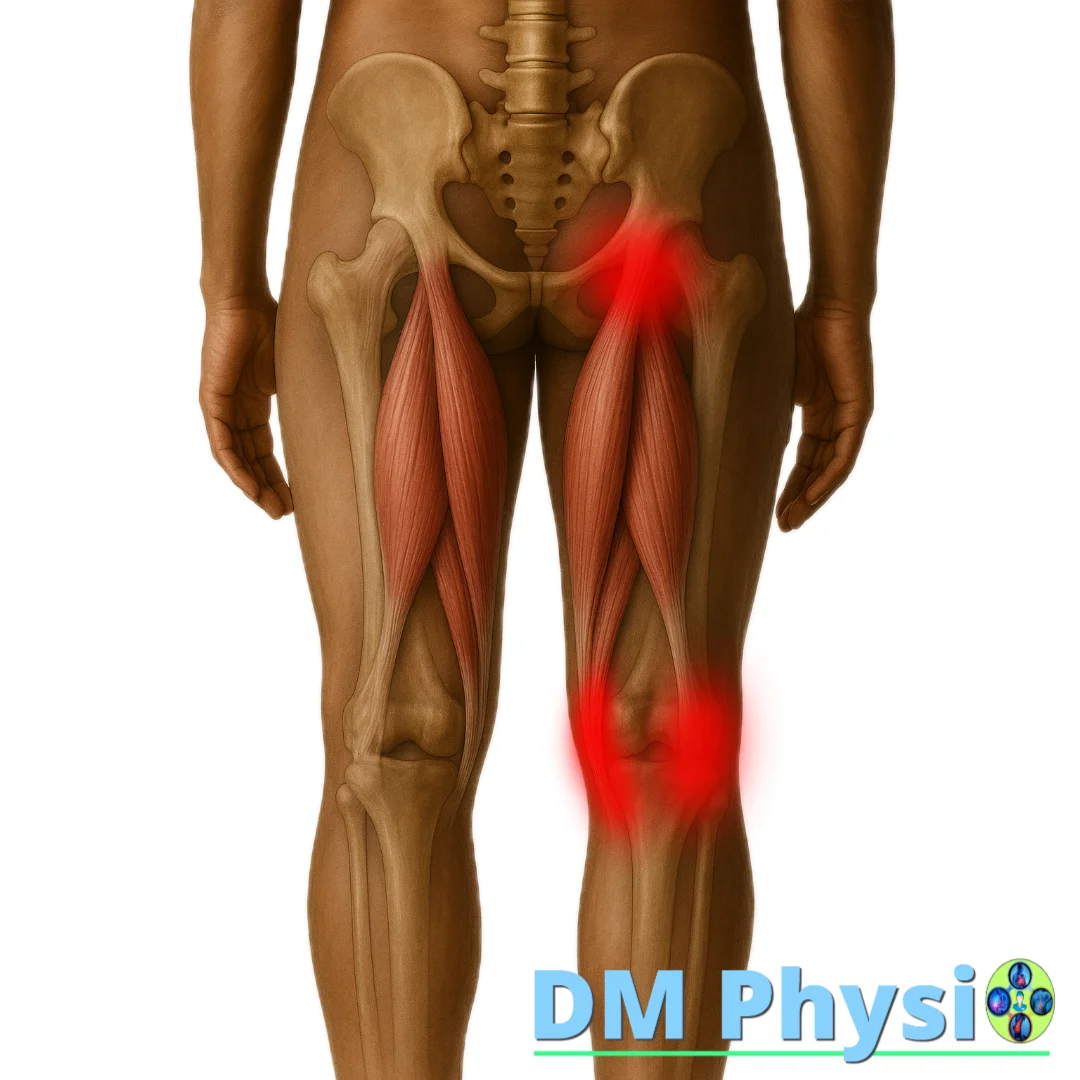
Anatomy and grip
They are located at the back of the thigh. They start from the ischial bone and attach to the bones of the lower leg.
The location of the pain is shown in red
- Pain under the buttock or at the back of the knee.
- It is aggravated when bending forward, standing up from a squat, or climbing stairs quickly.
- Also common during sprints or sudden accelerations.
m. quadriceps femoris
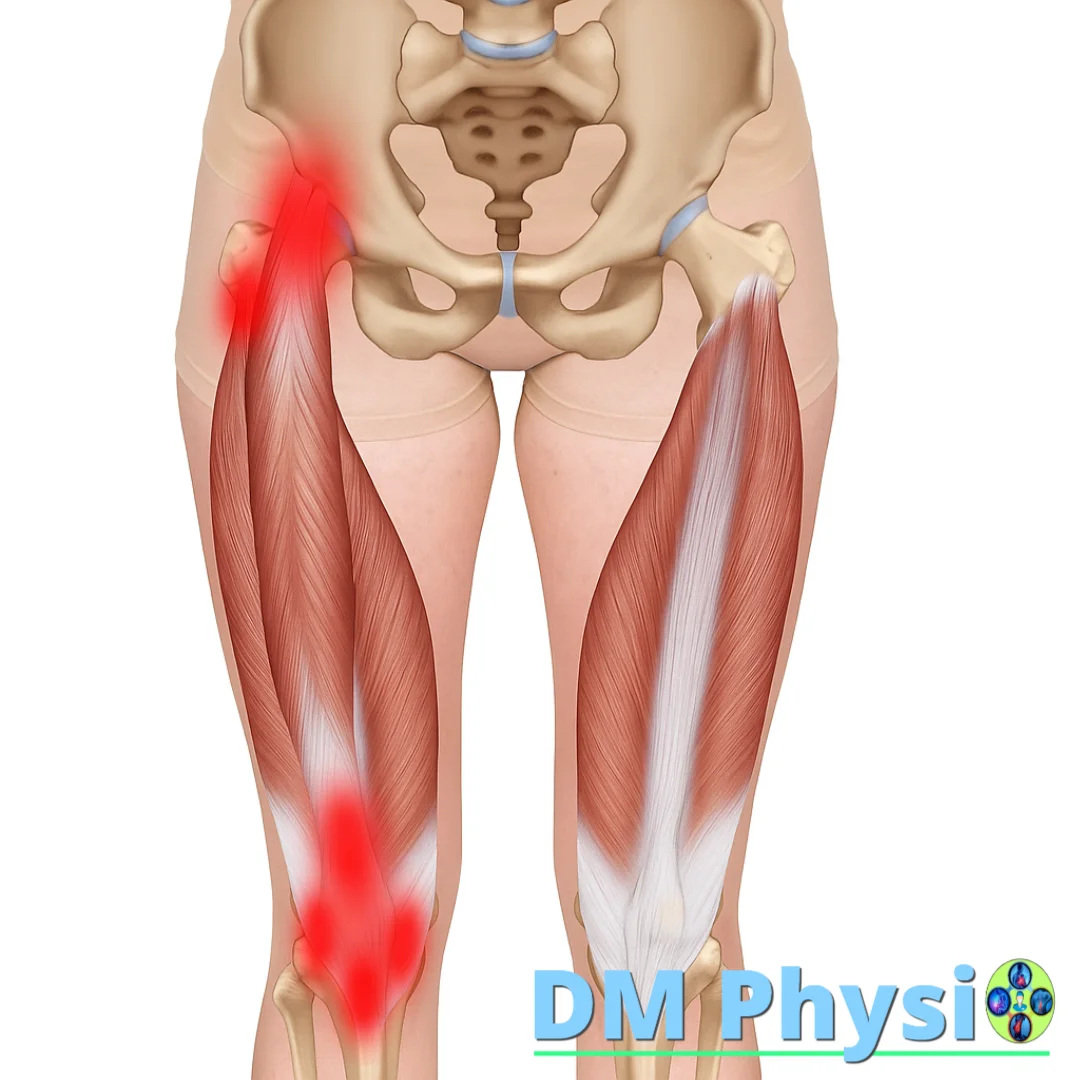
Anatomy and grip
It consists of four muscles in the front of the thigh, which attach via a common tendon to the knee cap and tibia.
The location of the pain is shown in red
- Pain in the front thigh and pelvis. It feels like pain below, above or in the knee itself.
- Occurs when going up and down stairs, squatting and getting up from a chair.
- In sports – during kicks and sharp accelerations.
m. iliopsoas
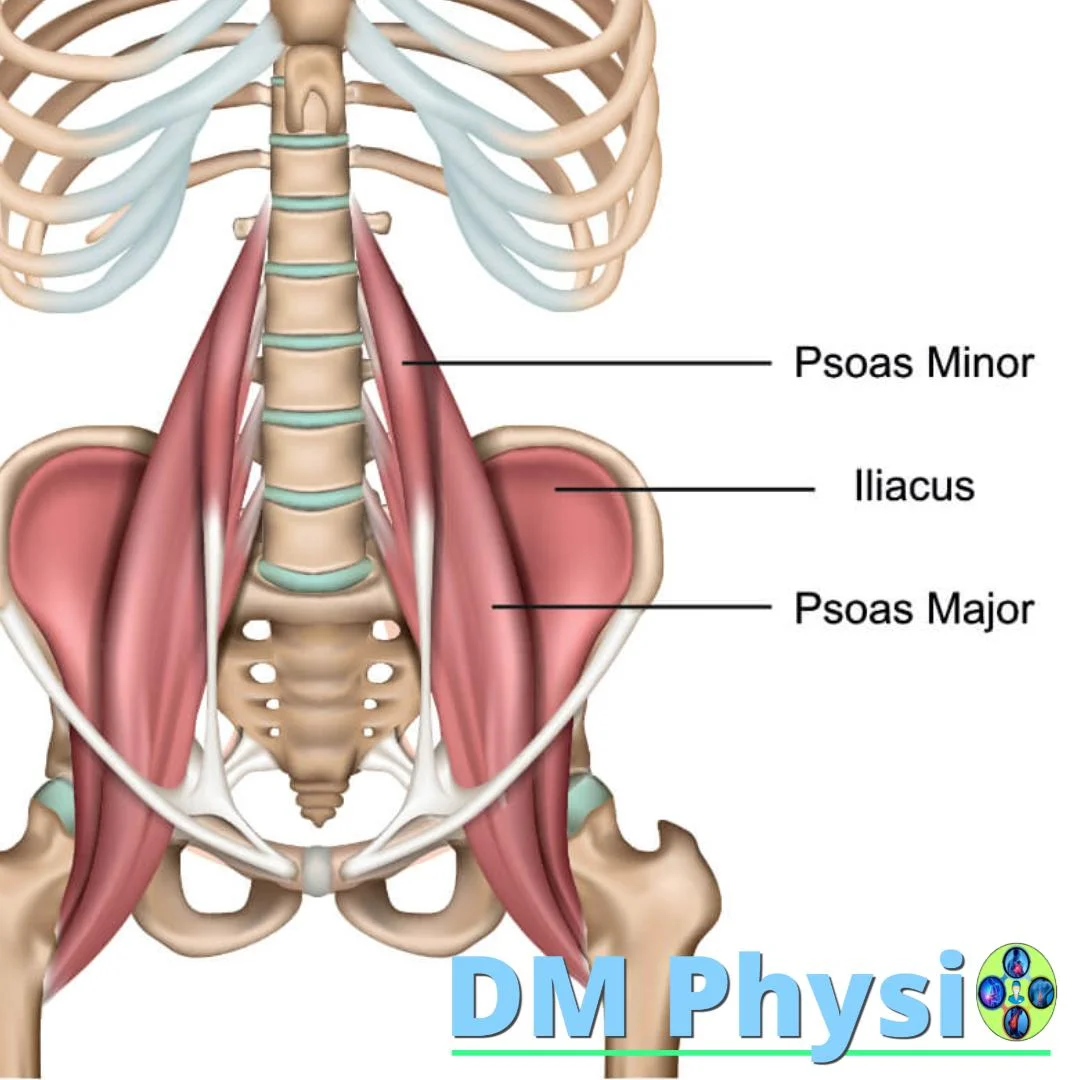
Anatomy and grip
It consists of psoas major and iliacus, which attach to the lesser trochanter of the femur.
The location of the pain is shown in red
- Deep pain in groin or in the front of the hip joint.
- It is provoked by getting up from a chair, climbing stairs and sitting for a long time.
- In sports - often in football and gymnastics.
How to deal with pelvic and buttock pain?
To eliminate the pain, we need to focus on relaxing, restoring and strengthening the muscles of the pelvis and buttocks.
1. Relaxation of tense muscles
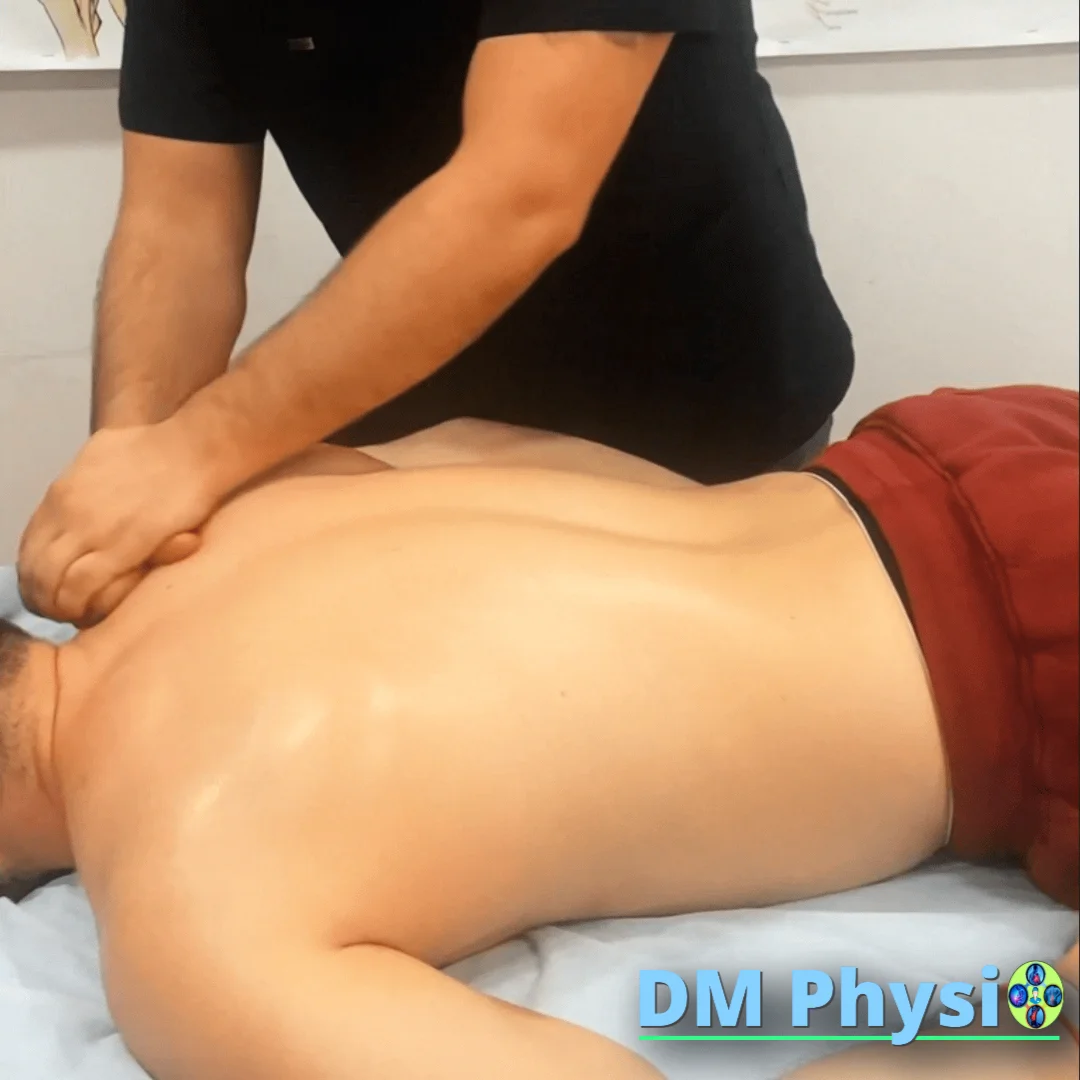
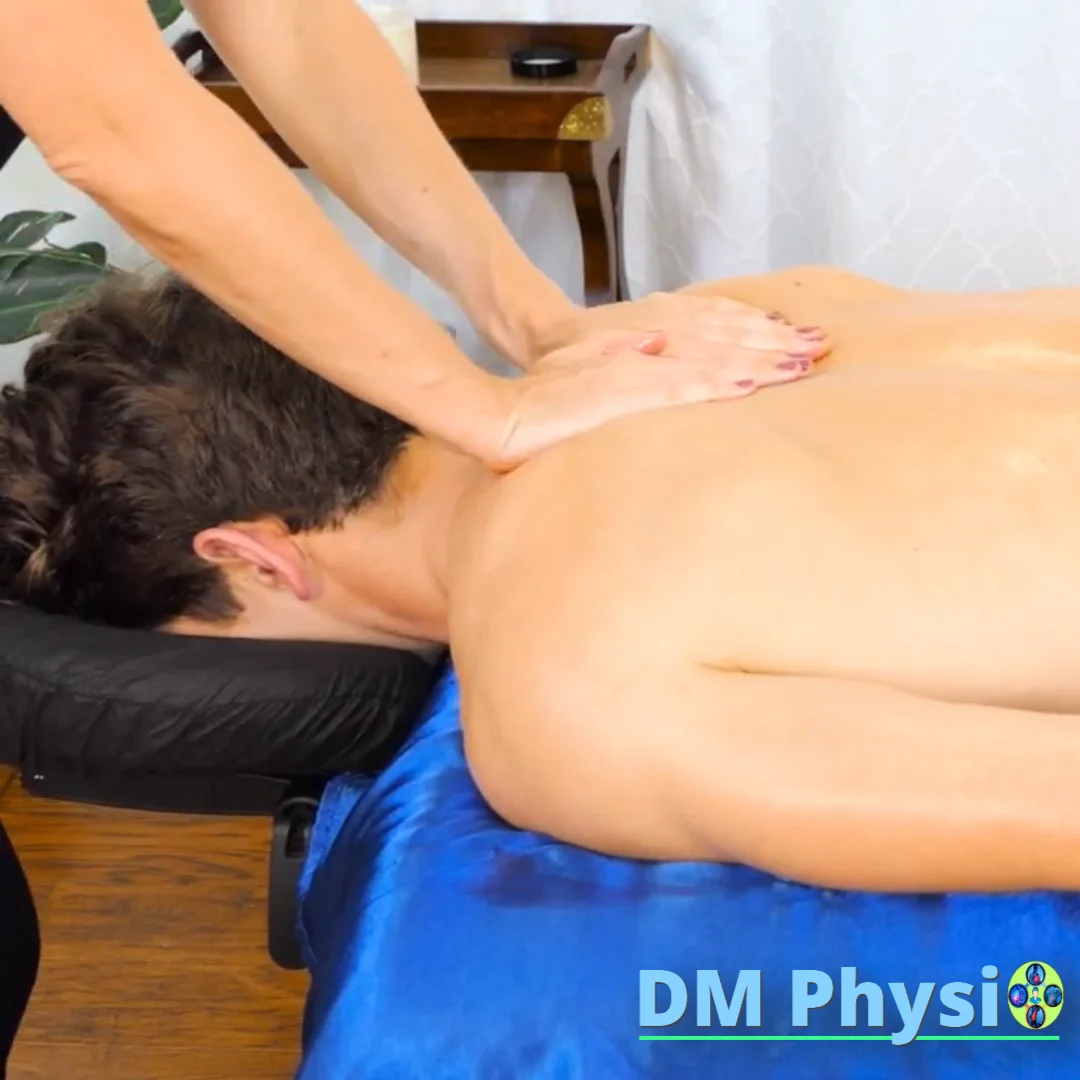
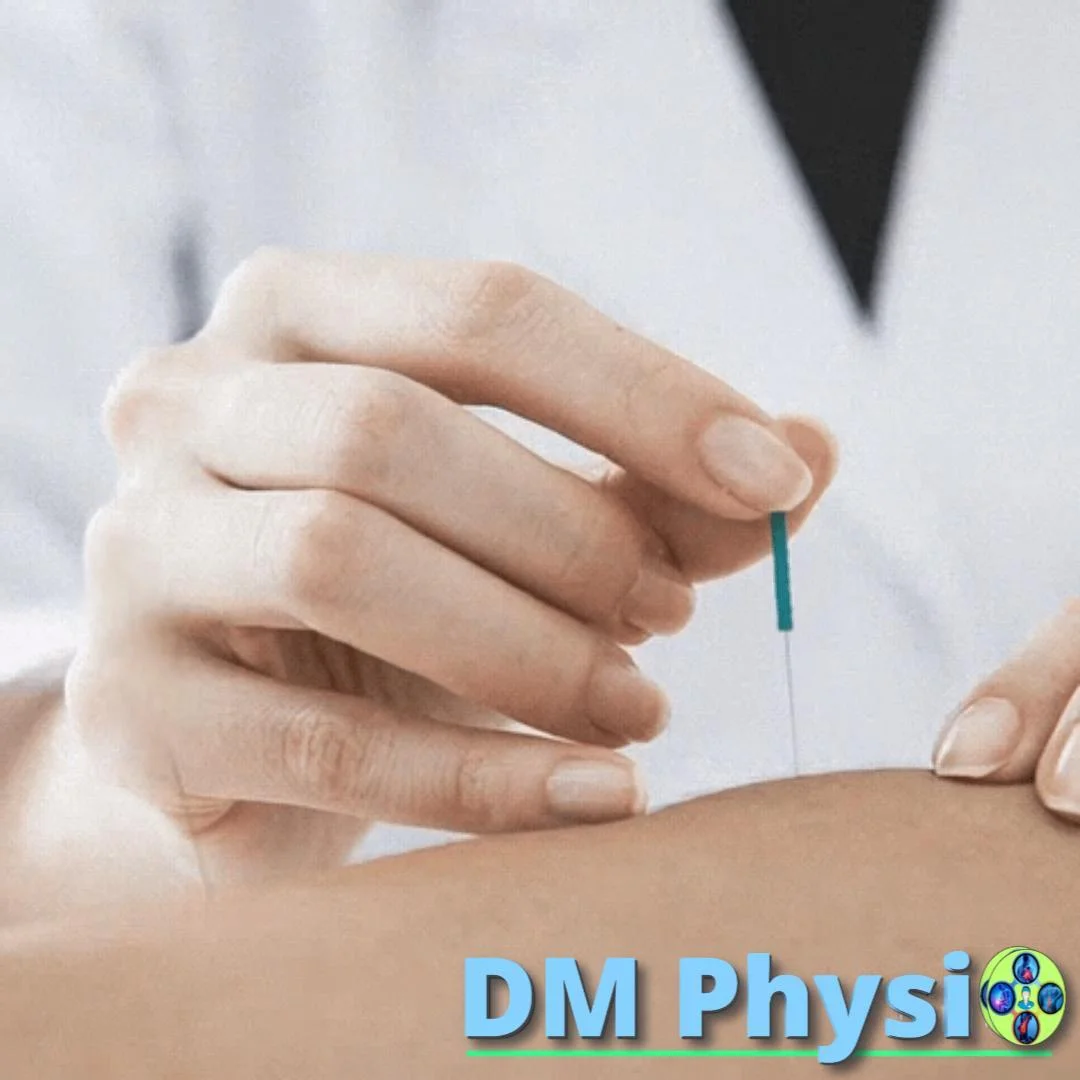
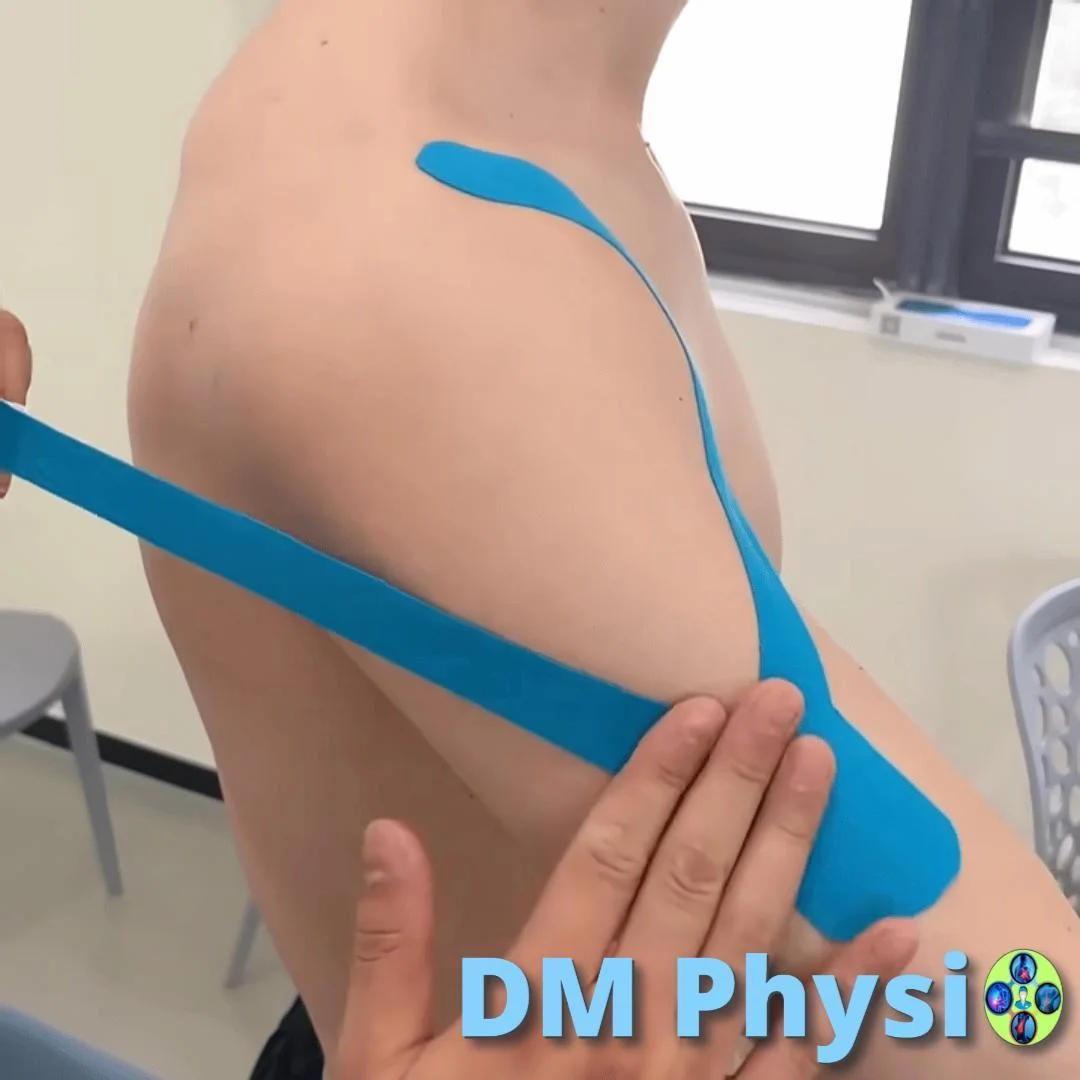
Through techniques such as deep tissue massage, myofascial release and manual therapy, we relax contracted muscle fibers and trigger points, to support better function and reduce pain.
2. Strengthening and balancing
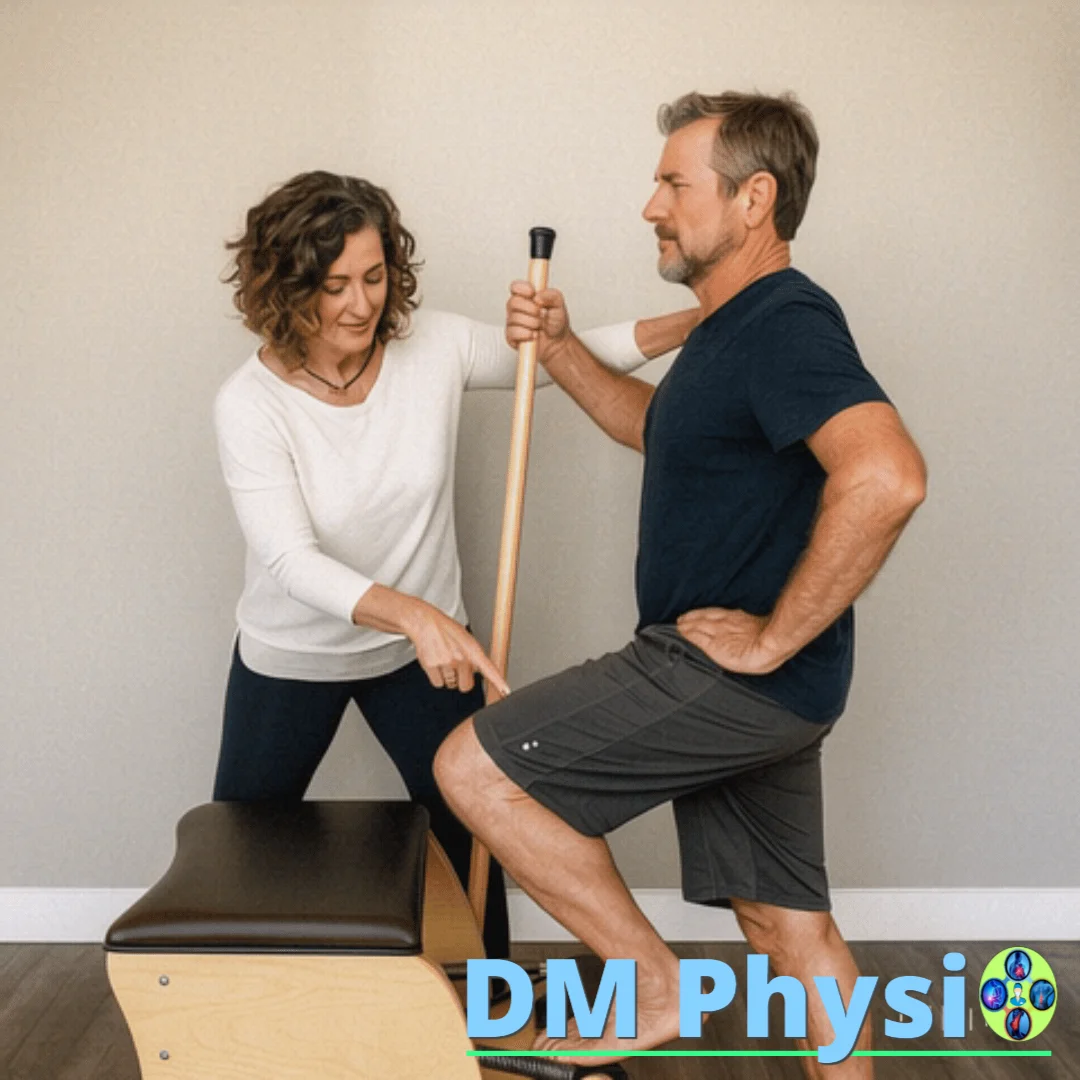
Once the muscles are relaxed, the focus is on strengthening the gluteal muscles and pelvic stabilizers, which are key to the health of this area.
3. Correction and prevention
We teach you specific exercises and tips for correct ergonomics and posture, to prevent future pain and keep your pelvis and buttocks healthy and mobile in the long term.